MATRIX MUNDI
MATRIX MUNDI
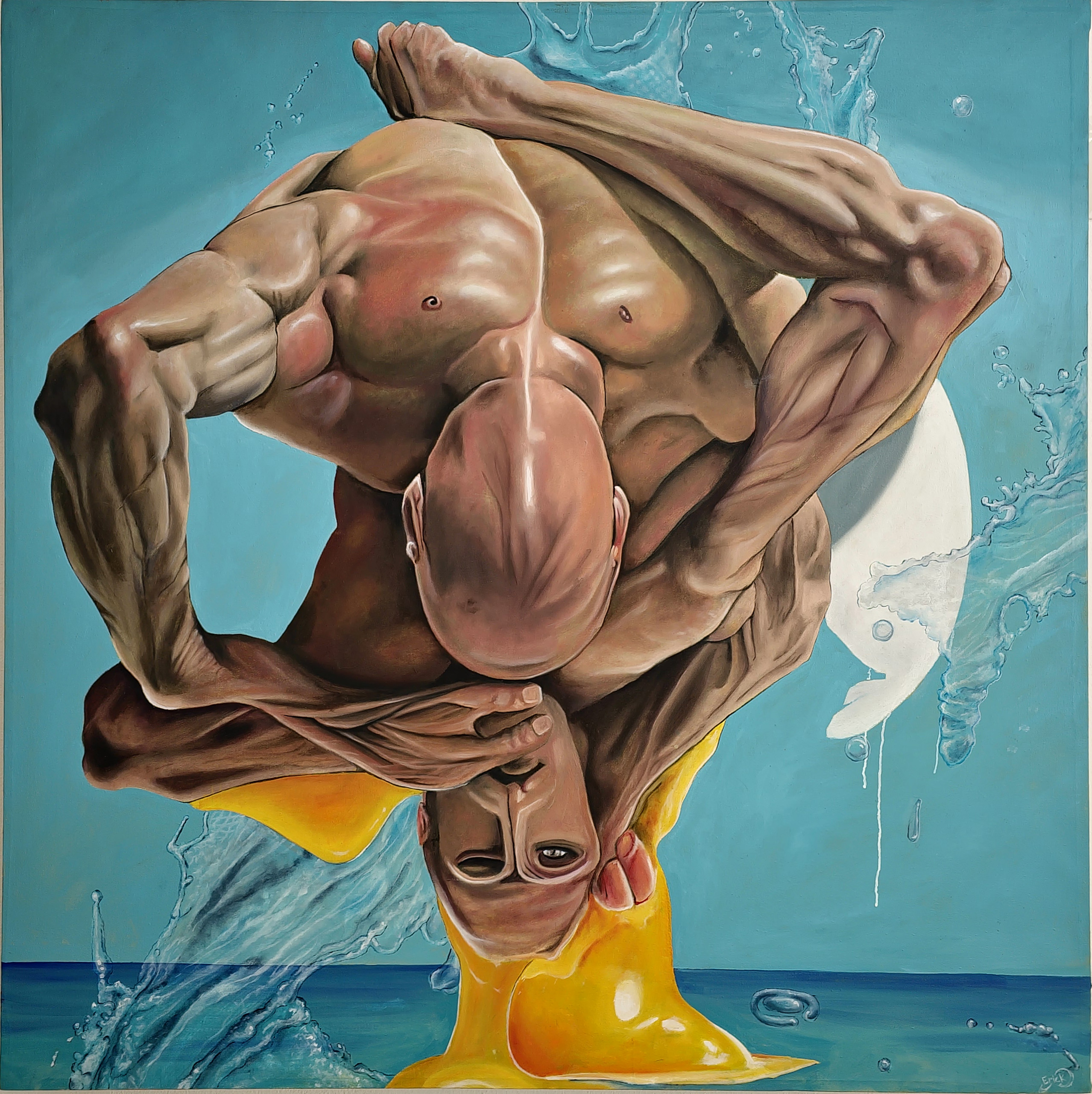
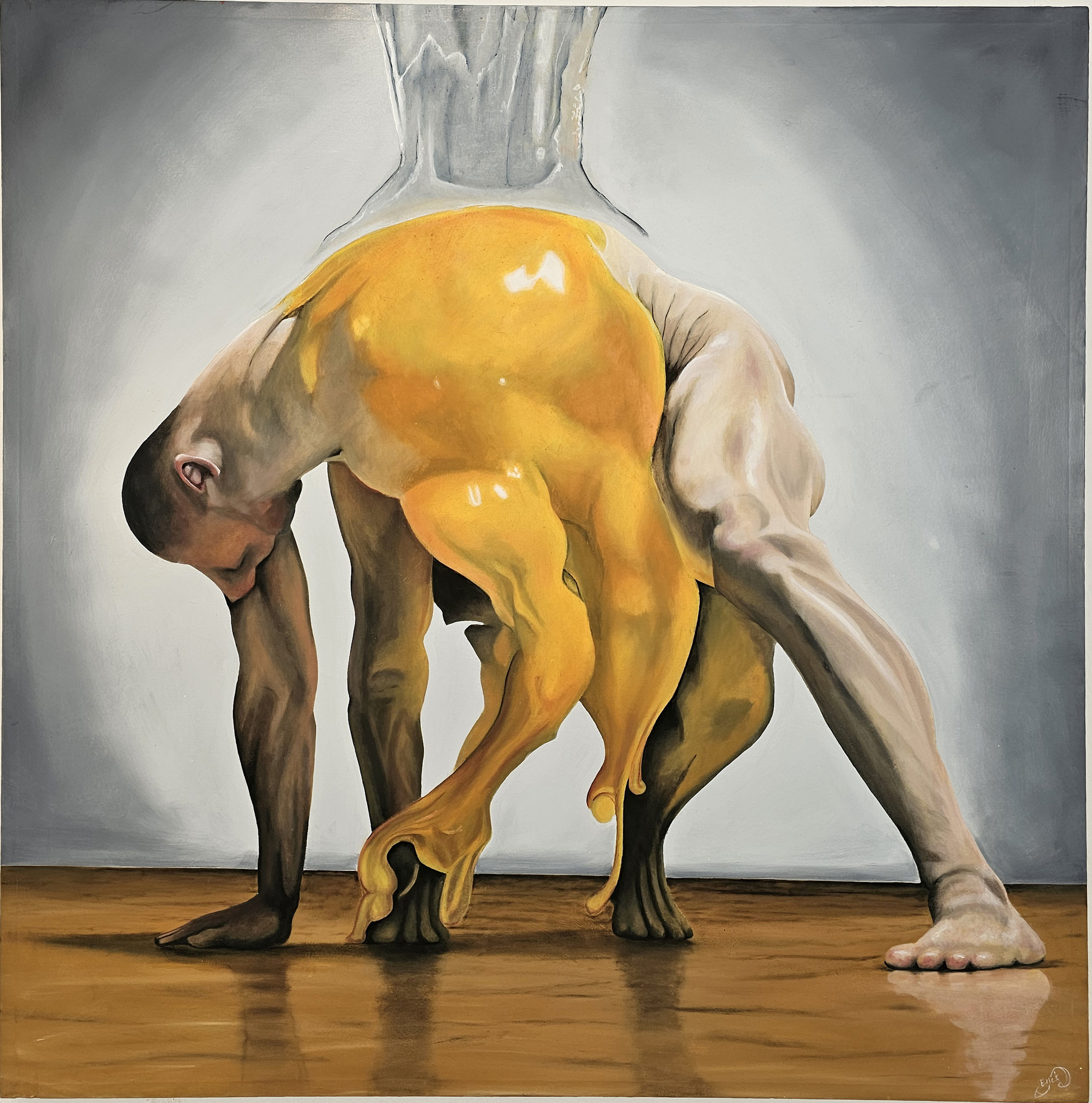
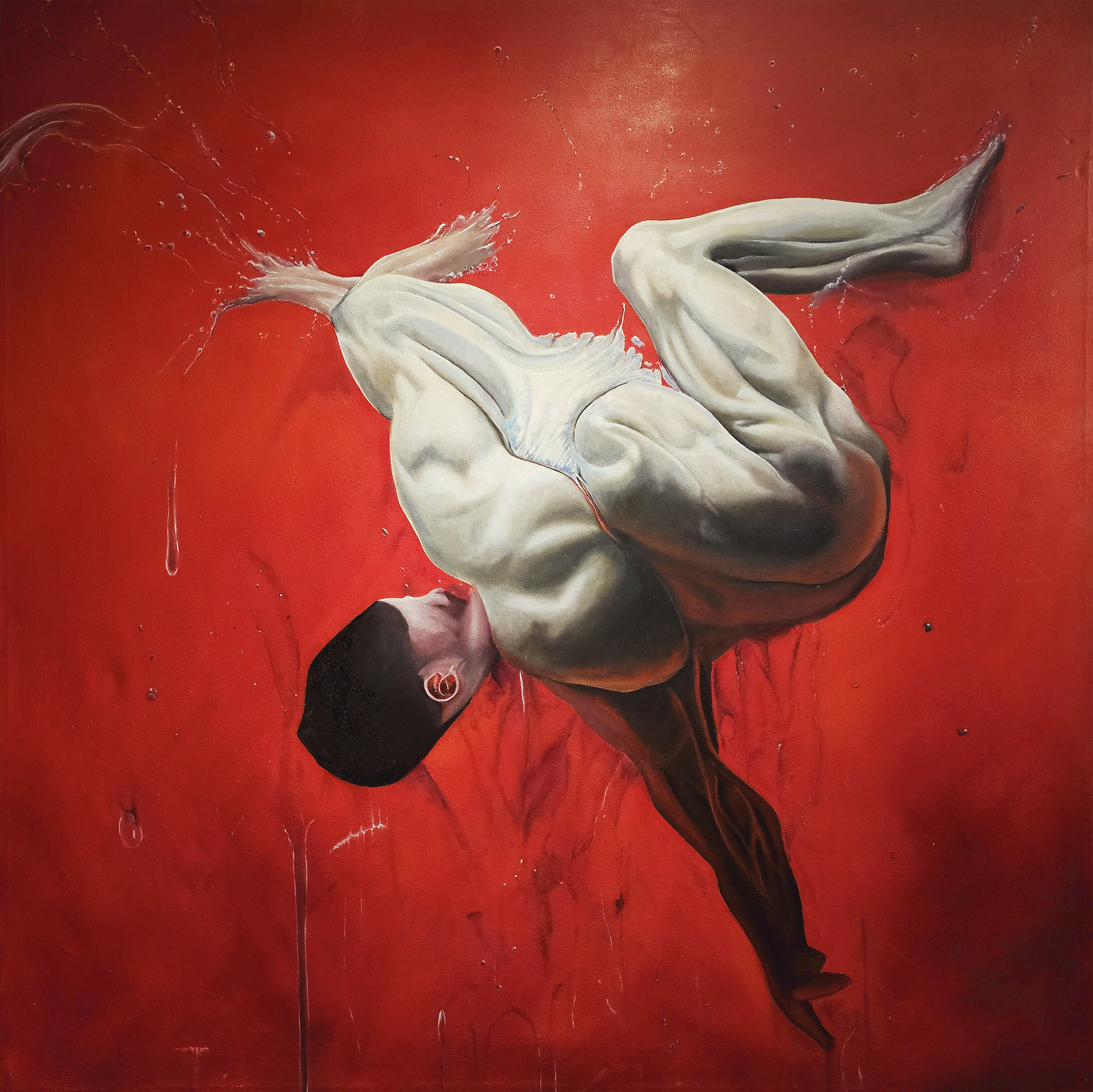
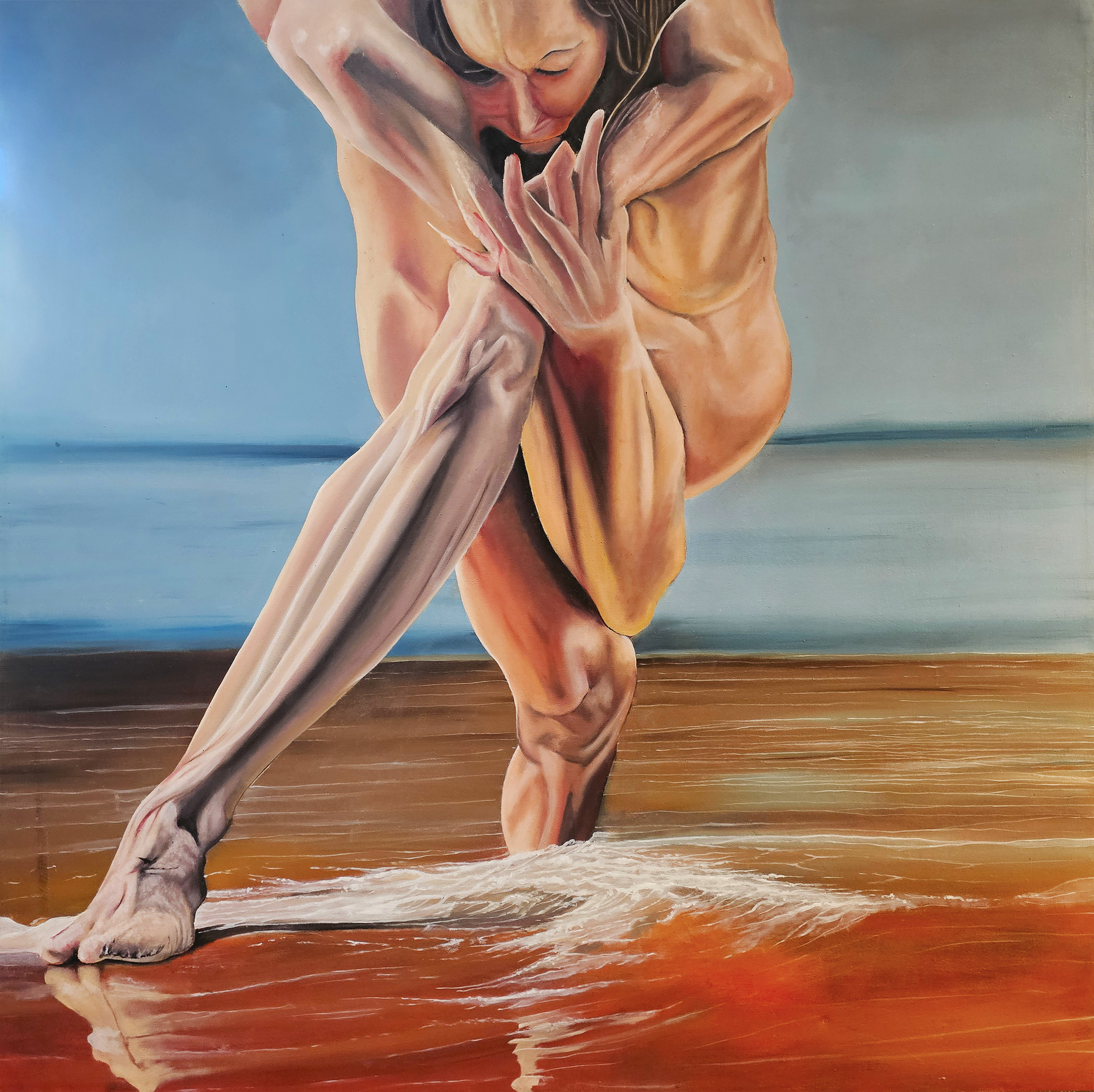
In "Matrix Mundi," this exhibition invites the viewer into a realm where the human form is distorted, fragmented, and re-imagined—dissected by the tactile forces of nature and time. The large oil paintings on display are confrontational in their scale and haunting in their depiction of malformed bodies, set against vivid, bold backgrounds that seem to pulse with an unsettling energy. These figures are simultaneously alien and intimately human, defying traditional representation and pushing the boundaries of anatomy, psyche, and existence.
The splashes of water that frequently interrupt the bodies—frozen mid-motion—serve as both an organic and surreal element in the work. Water, as a symbol of life, transformation, and fragility, becomes an agent of both nourishment and disruption, blurring the line between the body's decay and its regeneration. The splashes appear violent, chaotic, yet, in their irregularity, they give the body a fleeting sense of fluidity, an ephemeral movement amidst the stillness of the painted canvas.
Eggs, both intact and shattered, occupy a liminal space between the symbolic and the literal. As symbols of potential and birth, they carry the weight of creation itself, but when broken, they imply fragility, impermanence, and vulnerability. The egg—whole or cracked—becomes an emblem for the cyclical nature of life, death, and renewal. It is the fragile vessel, cracked open, revealing the delicate interior, just as the human form itself, when broken or transformed, exposes its innermost essence.
The choice of bold, almost garish background hues contrasts with the unnerving softness of the bodies and eggs, creating a visual tension that echoes the instability of the human condition. These vibrant planes of color intensify the emotional force of the works, transforming the figures from mere representations into metaphysical bodies caught between worlds: the physical and the existential, the living and the dying, the whole and the fragmented.
The viewer is drawn into a confrontation with the anatomy of the body, not as a sacred, unchanging form, but as something in flux—something subject to forces beyond control. The union of bodies, water, and eggs becomes a meditation on creation and destruction, on the rupture and repair of our most primal states of being.
As you move through the gallery, ask yourself: What do we lose and what do we gain in the process of becoming? What is the true nature of wholeness, and how do we reckon with the imperfections that define us? "Matrix Mundi" challenges the viewer to see beauty in the broken, strength in the vulnerable, and the extraordinary in the familiar.